Hokkaido Koma-ga-take
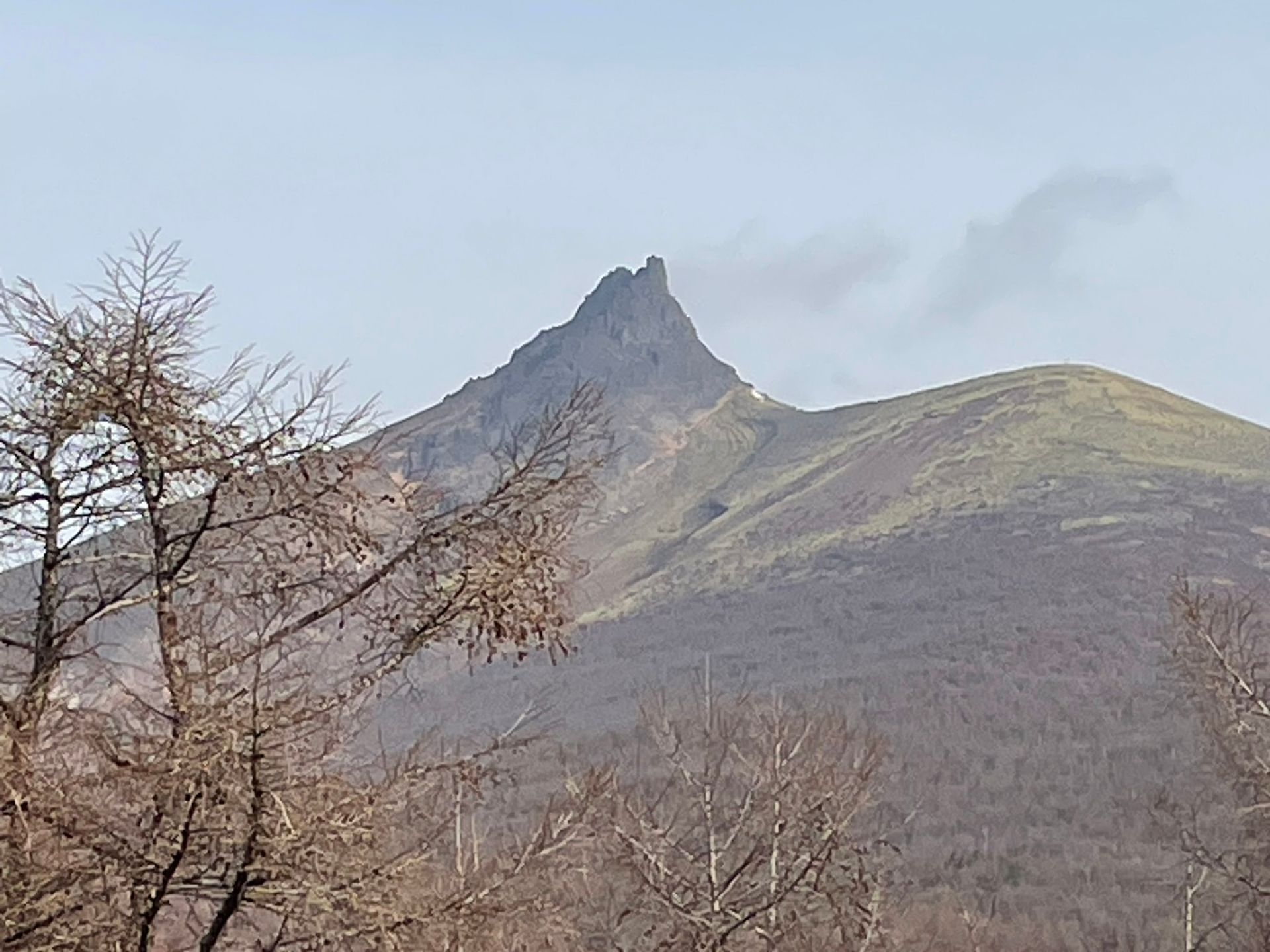
Situated in the Ōnuma Quasi-National Park not too far north of Hakodate, this active volcano is a nice, steady ascent with a final semi-technical route to the top of the pinnicle. Awe inspiring views on a clear day make this climb one of the best in Japan.
The Aka‑gawa trailhead begins inside the remnants of an old development area on the western foot of Hokkaidō Koma‑ga‑take — a wide, open zone of disused roads, grassy clearings, and scattered foundations that hint at long‑abandoned plans for a resort. The trail starts at the back of this area, following a broad gravel track before narrowing into a defined path that enters low forest.
The first section climbs steadily through mixed woodland and sasa, gaining height quickly as it approaches the base of the volcano’s western ridge. The forest thins earlier than on most Hokkaido peaks, and within a short time the trail breaks into open terrain where the mountain’s dramatic horseshoe‑shaped crater rim dominates the skyline.
From here, the route transitions onto loose volcanic ash and pumice, climbing a broad ridge with increasingly expansive views over Ōnuma and Konuma lakes. The landscape becomes stark and elemental — pale ash underfoot, scattered lava blocks, and long, sweeping ridgelines carved by past eruptions. The path is clear but exposed, and strong winds are common.
As the ridge steepens, the trail approaches the remains of the old top station, a concrete platform and structural remnants perched high on the western slope. This final climb is the most demanding part of the route: a sustained ascent on shifting ash and gravel, with the summit walls rising sharply ahead. The top station area serves as the designated high point for hikers, offering a dramatic vantage over the crater interior and the jagged summit rim, which remains closed due to ongoing volcanic activity.
From this upper platform, the views are exceptional — the full sweep of the crater, the Pacific coastline, and the lakes and wetlands of Ōnuma Quasi‑National Park. If you have the knowledge and experience in low pitch free climbing the final ascent to the true summit is there to be done. But please climb within your ability level and remember, coming down is more dangerous than ascending with true climbing routes. Like all vilcanic rock, there is a far amount of choss so care must be taken!
After taking in the scenery, hikers return the same way, descending carefully through the loose upper slopes before re‑entering the forest and the open development zone at the base.
Hokkaidō Koma‑ga‑take is one of the most visually striking volcanic hikes in Japan: raw, exposed, and unforgettable, with a landscape that feels closer to Iceland than Hokkaido.